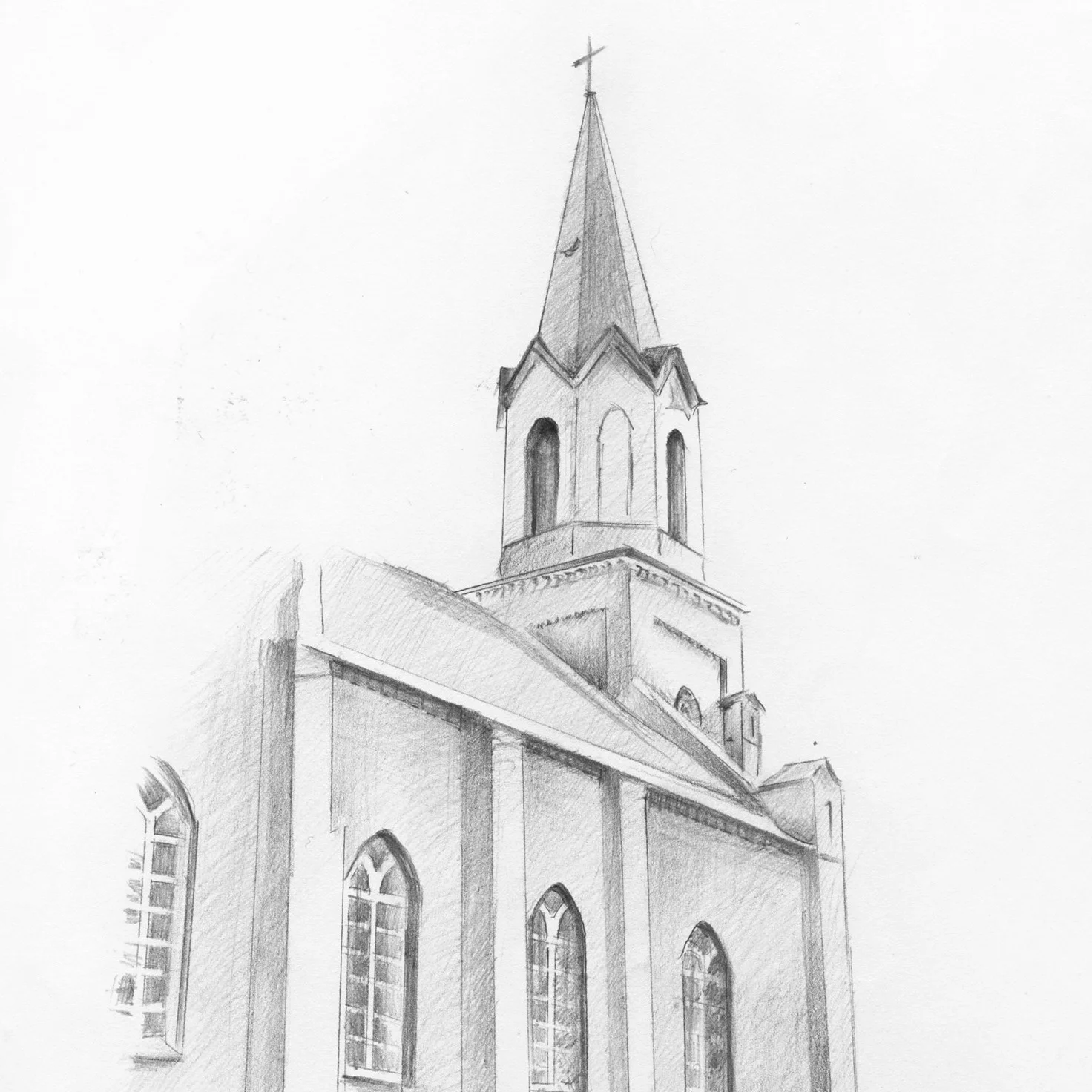
Born in Lithuania, raised in Latvia! Despite hardships, it has survived two wars and the times of Soviet persecution. The foundation stone of the church was laid on May 9, 1865. At that time, this was the territory of the Kaunas Governorate of the Russian Empire.
Local homeowners built their church with their own efforts. Nearly half of the money needed for the construction and furnishing of the church was donated by the Budberga congregation itself and by the owners of the surrounding estates. Donations were also received from Lutheran congregations in Jelgava, Biržai, Tartu, Saint Petersburg, and Germany. Among the donors were the Gustav Adolf Society (in Germany), Wilhelm, King of Prussia, and Georg, King of Hanover. Baron von Budberg sold bricks and roof tiles for the construction of the church at a 20% discount. The first service in the still unfinished church took place on December 11, 1866.
After the founding of the independent state of Latvia in 1918, the church was located on the territory of Lithuania. In 1921, Latvia took over this territory, as well as the Aknīste and Ukri parishes, from Lithuania in exchange for Palanga and Šventoji.
During the Second World War, the spire of the church tower was destroyed and Russian soldiers ravaged the organ built by Augusts Martins. Both the organ and the church tower spire have been restored with God's blessing, thanks to donors and the enthusiasm of the congregation. The church has the status of a cultural-historical monument.
St. Paul's Budberga Lutheran Church has never been closed to services and is still active. Services are held on the third Sunday of each month at 3:00 PM. Services do not take place from Christmas to Easter.
On May 24, 2025, St. Paul's Budberga Lutheran Church celebrated its 160th anniversary.
Remembrance also holds special significance here — in the church garden there is a place connected with those who were deported, and trees that quietly tell the story of those who were taken away but have not been forgotten.
Your donation is not just funding — it is an investment in a place that has a soul. Every euro helps, step by step, to restore and preserve the Budberga Church for future generations.